Cultural Informative
Bookmarks: Translating Cultural Narratives into Visual Form
Research
The research focused on understanding the cultural, historical, and symbolic significance of Pune’s Manache Ganpati idols. These temples date back nearly a century and hold deep social and historical importance, especially during the Ganpati festival. Research included studying the origins of the Ganesh festival, the distinct attributes of each idol, and their role within the city’s collective memory. This understanding informed both the illustrative approach and the information presented on each bookmark.
Description
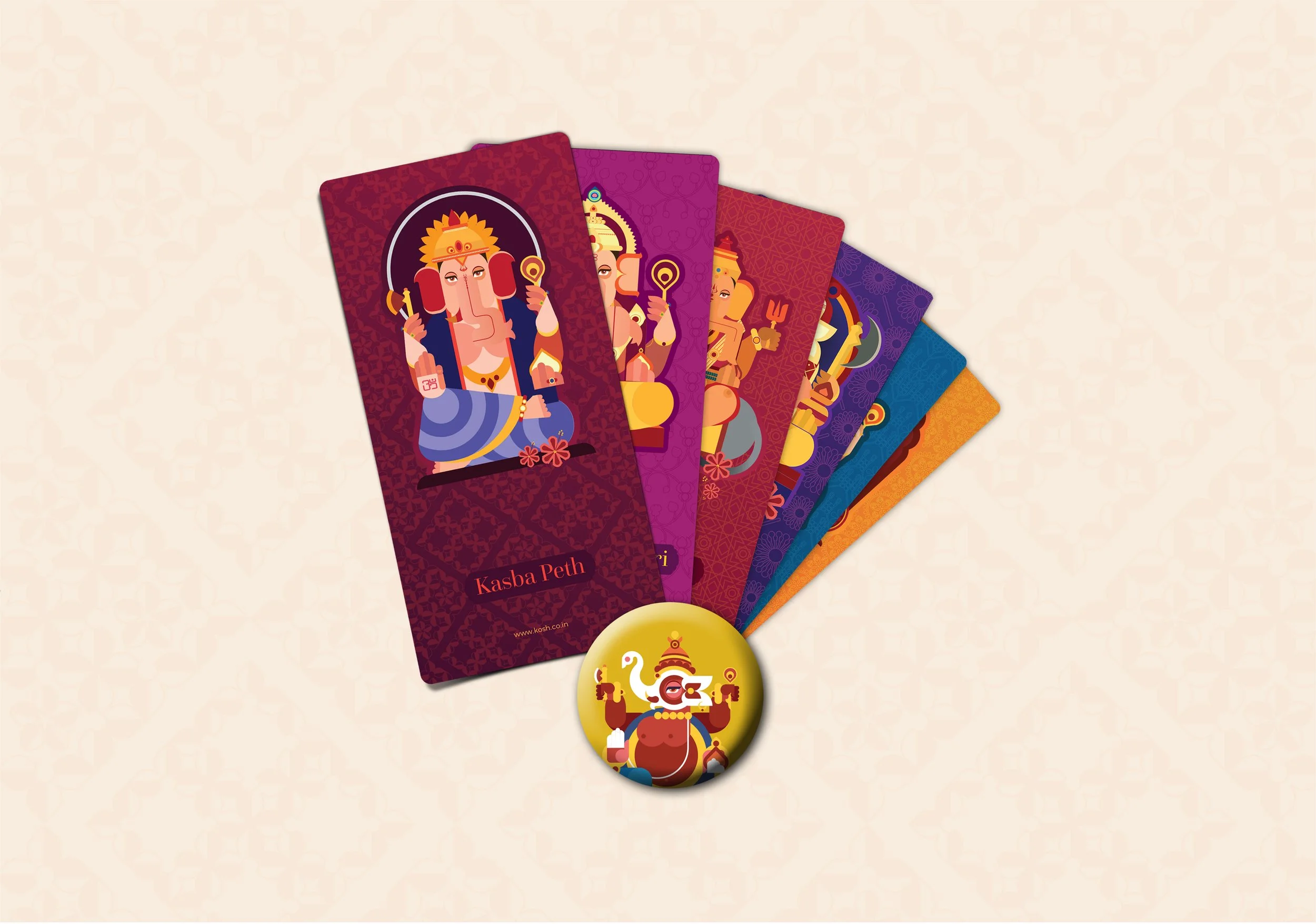
Ganpati is a Hindu god who is celebrated throughout India. Ganesh Festival is the This project was a live collaboration with KOSH, a knowledge and lifestyle brand focused on India’s culture, traditions, and stories. The project centered on creating a series of illustrated bookmarks that honor Pune’s most revered Ganpati idols figures deeply embedded in the city’s cultural and historical fabric. The work explored how visual design can act as a medium for storytelling, preservation, and everyday engagement with cultural heritage.
Objective
The objective of this project was to design a set of illustrated bookmarks that visually represent Pune’s most honored Ganpati idols while communicating their historical and cultural significance in an accessible, contemporary format. The intention was to balance reverence with clarity, creating artifacts that could both inform and be used in daily life.
Discipline
Illustration / Branding / Typography
Challenges
Translating culturally significant and sacred figures into illustrations without losing their meaning or reverence.
Balancing visual simplicity with the richness of historical detail associated with each Ganpati idol.
Creating a cohesive visual system across multiple bookmarks while allowing each idol to retain its unique identity.
Designing for everyday use, ensuring the artifacts felt approachable rather than ornamental.
Problem Statement
How might cultural and historical narratives be translated into visual artifacts that are informative, respectful, and accessible, while remaining relevant to contemporary audiences?
Solution
A cohesive set of illustrated bookmarks translated cultural research into a clear visual system. Simplified illustrations and concise contextual information work together to make cultural narratives accessible through everyday use.
Visual Design Process
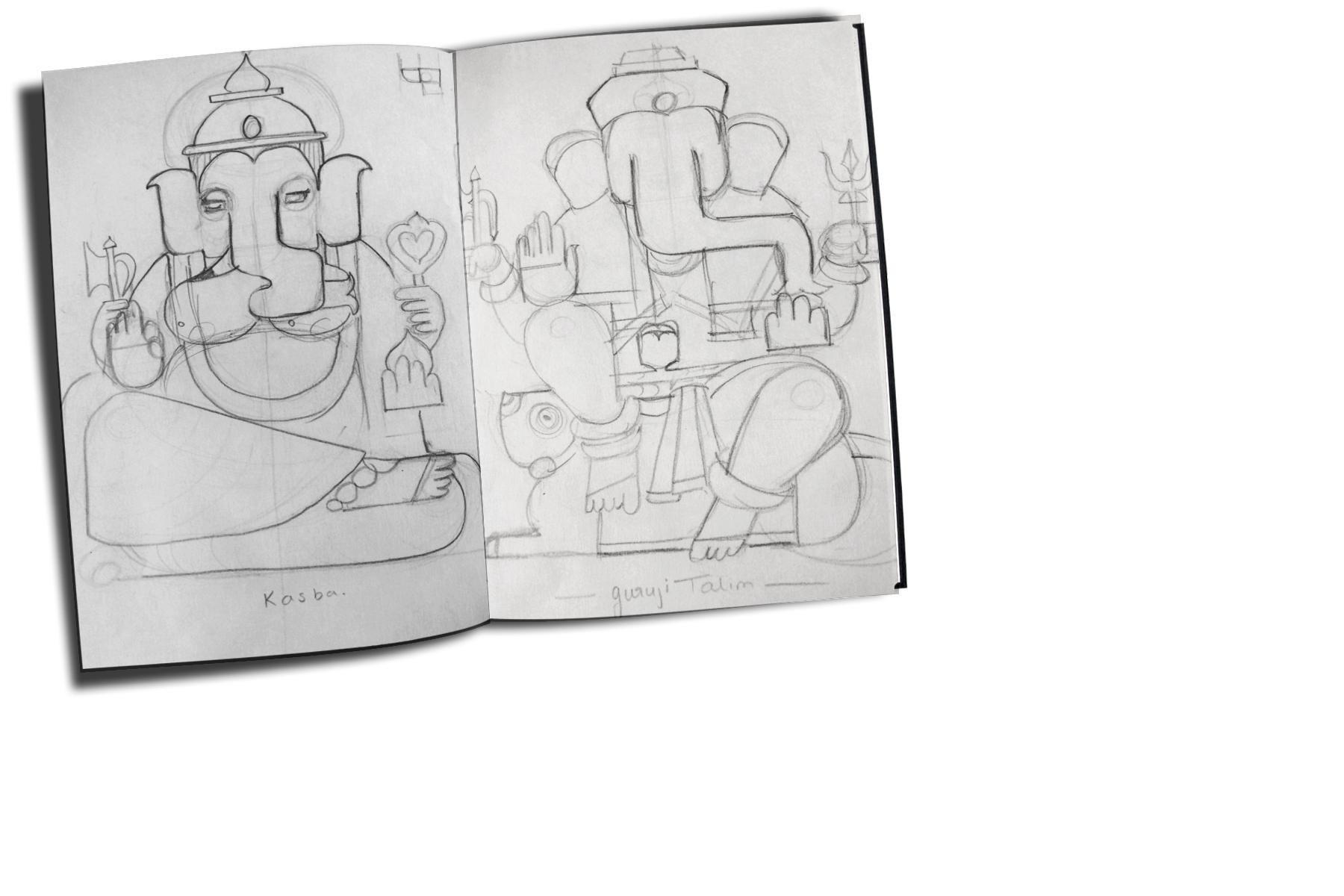
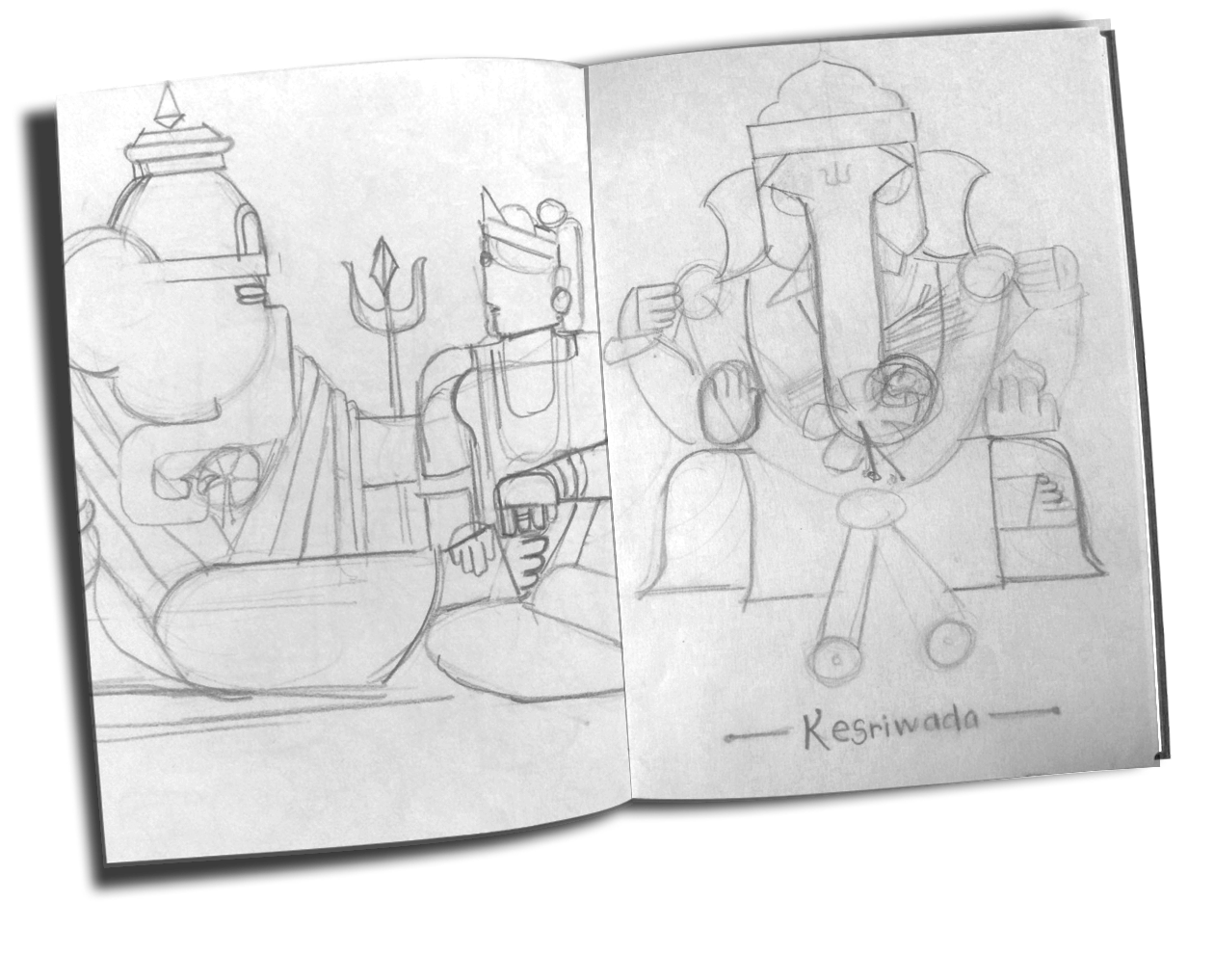
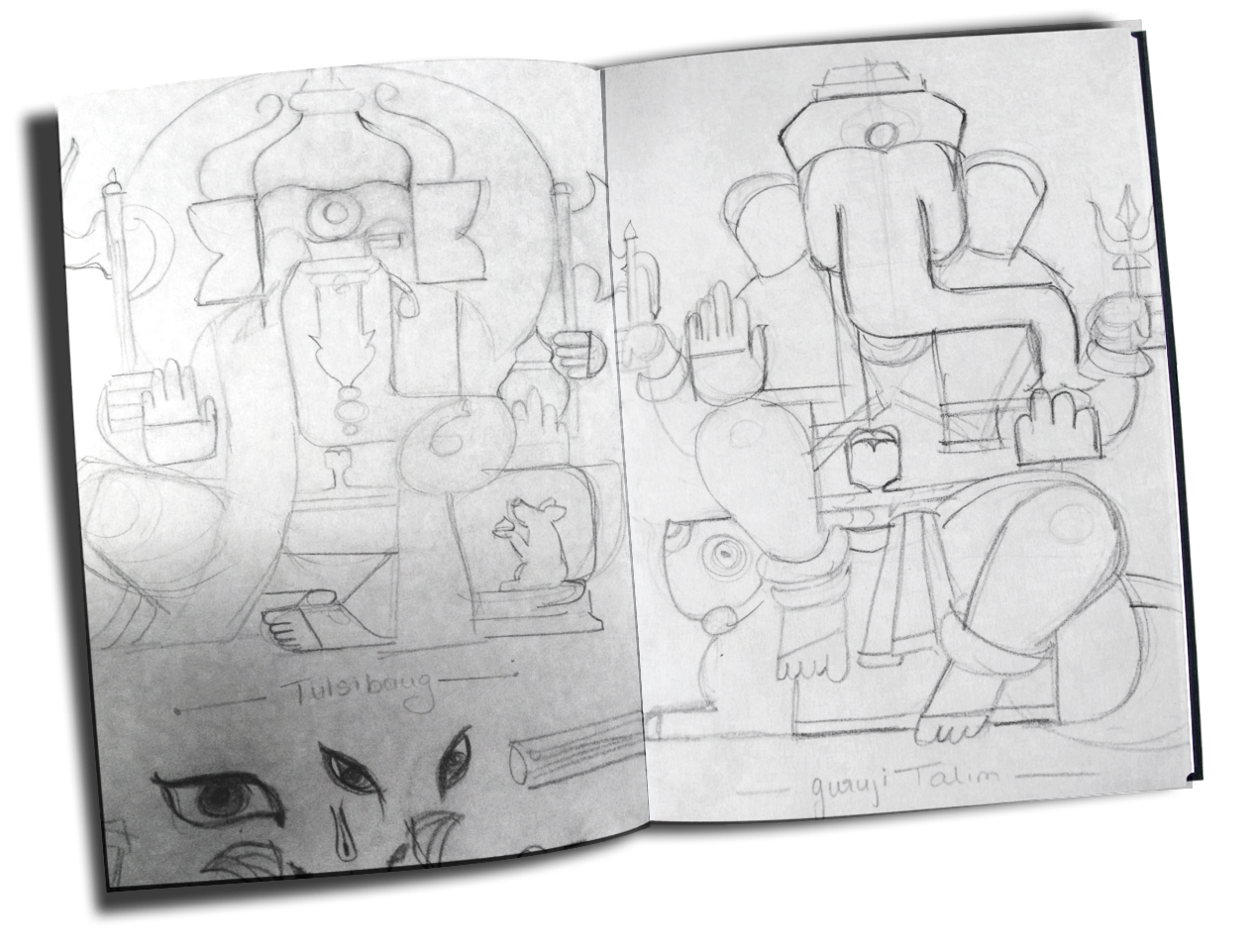
The visual design process began by studying the distinct visual and symbolic elements associated with each Ganpati idol. Sketches and form explorations were used to simplify complex details into a consistent illustrative language. The KOSH visual style—derived from merging and dividing basic geometric shapes—informed the overall approach, allowing the illustrations to remain minimal while retaining character and symbolism.
Typography and layout were considered as part of the system, with typefaces chosen for clarity and tone. Each bookmark was designed as a two-sided artifact: the front featuring the illustration, and the back providing contextual information about the idol and its history. This structure allowed visual storytelling and information to coexist without competing for attention.



Outcomes
Created a cohesive set of illustrated bookmarks representing Pune’s most honored Ganpati idols.
Established a consistent illustration style that balanced simplicity, symbolism, and cultural respect.
Designed a dual-sided system combining visual narrative on the front and historical context on the back.
Extended the visual language into social media assets to support outreach and engagement.
Learnings
Gained a deeper understanding of how research and cultural context can guide visual decision-making.
Learned to simplify complex, symbolic forms while preserving their meaning and identity.
Understood visual design as a tool for storytelling and knowledge sharing, not just aesthetics.
Reinforced the importance of sensitivity and responsibility when working with culturally significant subjects.