

The Design List:
Exploring Systems for Creative Collaboration
Research Overview
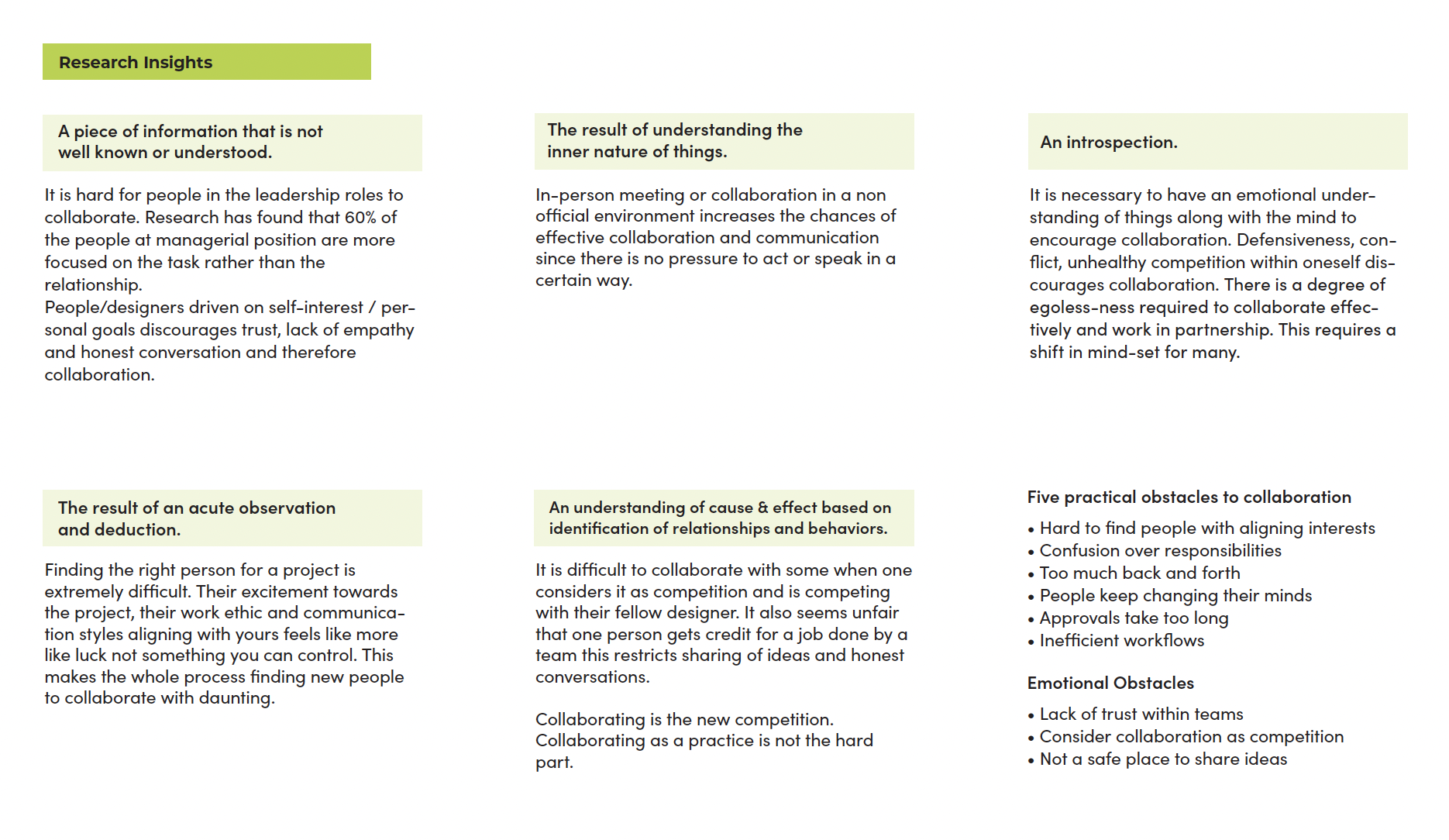
The research focused on understanding the emotional and practical challenges designers face when seeking collaboration. Through interviews, reflection, and analysis, I examined recurring themes around trust, ego, competition, and misalignment, as well as practical constraints such as time, unclear expectations, and access.
Rather than starting with a predefined solution, the research aimed to surface patterns in behavior and motivation. These insights shaped the direction of the system and informed how interaction, access, and participation could be structured more intentionally.
Research methods
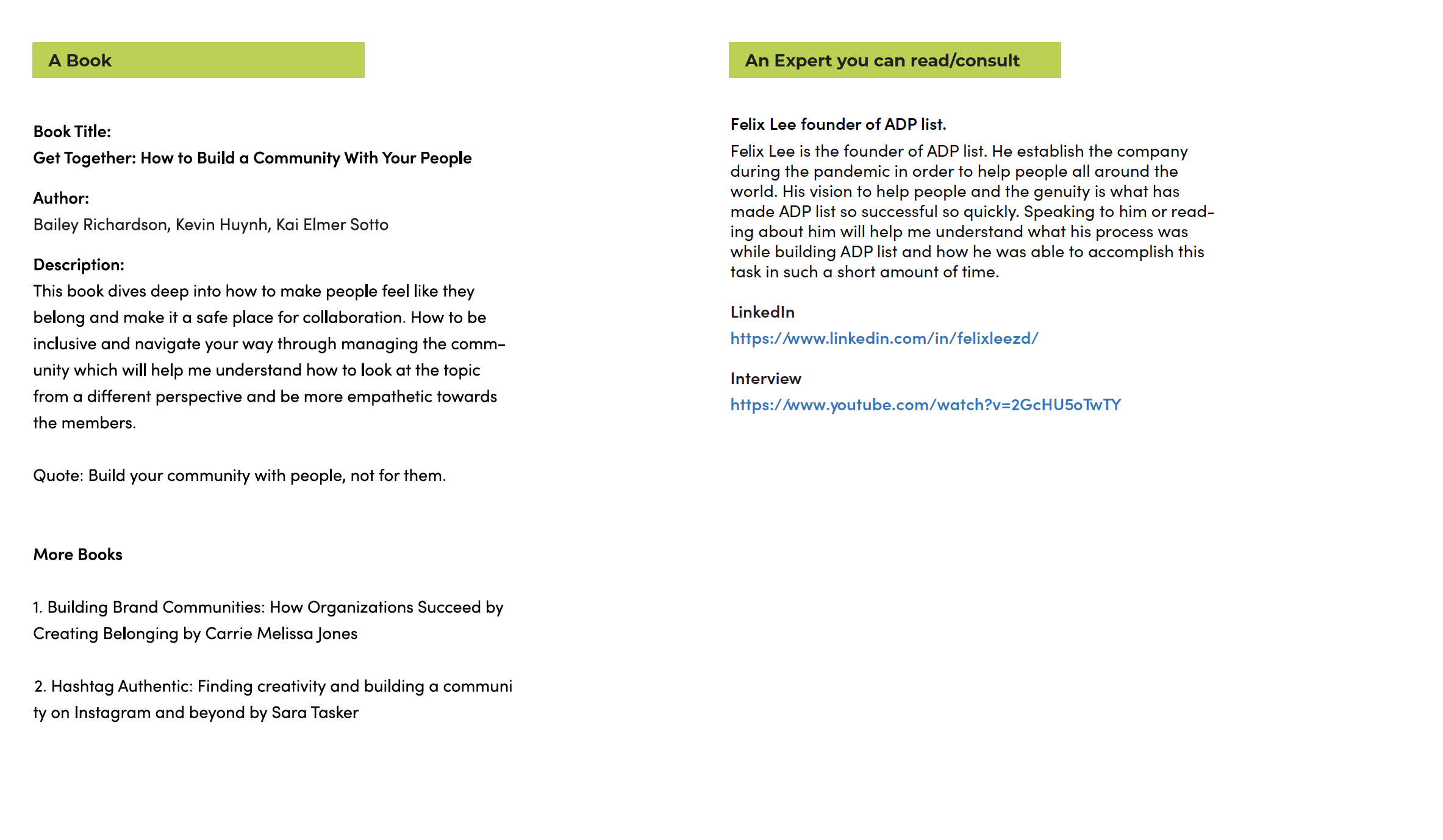
Conversations & Interviews: Spoke with designers to understand how collaboration, trust, and access are experienced in practice.
Pattern & Theme Identification: Synthesized recurring emotional and practical patterns such as hesitation, misalignment, and time constraints.
Persona-Based Synthesis: Translated insights into behavior- and context-driven personas to frame different collaboration needs.
Platform & Landscape Review: Reviewed existing platforms and informal networks to identify gaps and limitations in current collaboration spaces.
Research Through Making: Used diagrams, journeys, and early explorations as tools to think through system structure and interaction.
Context
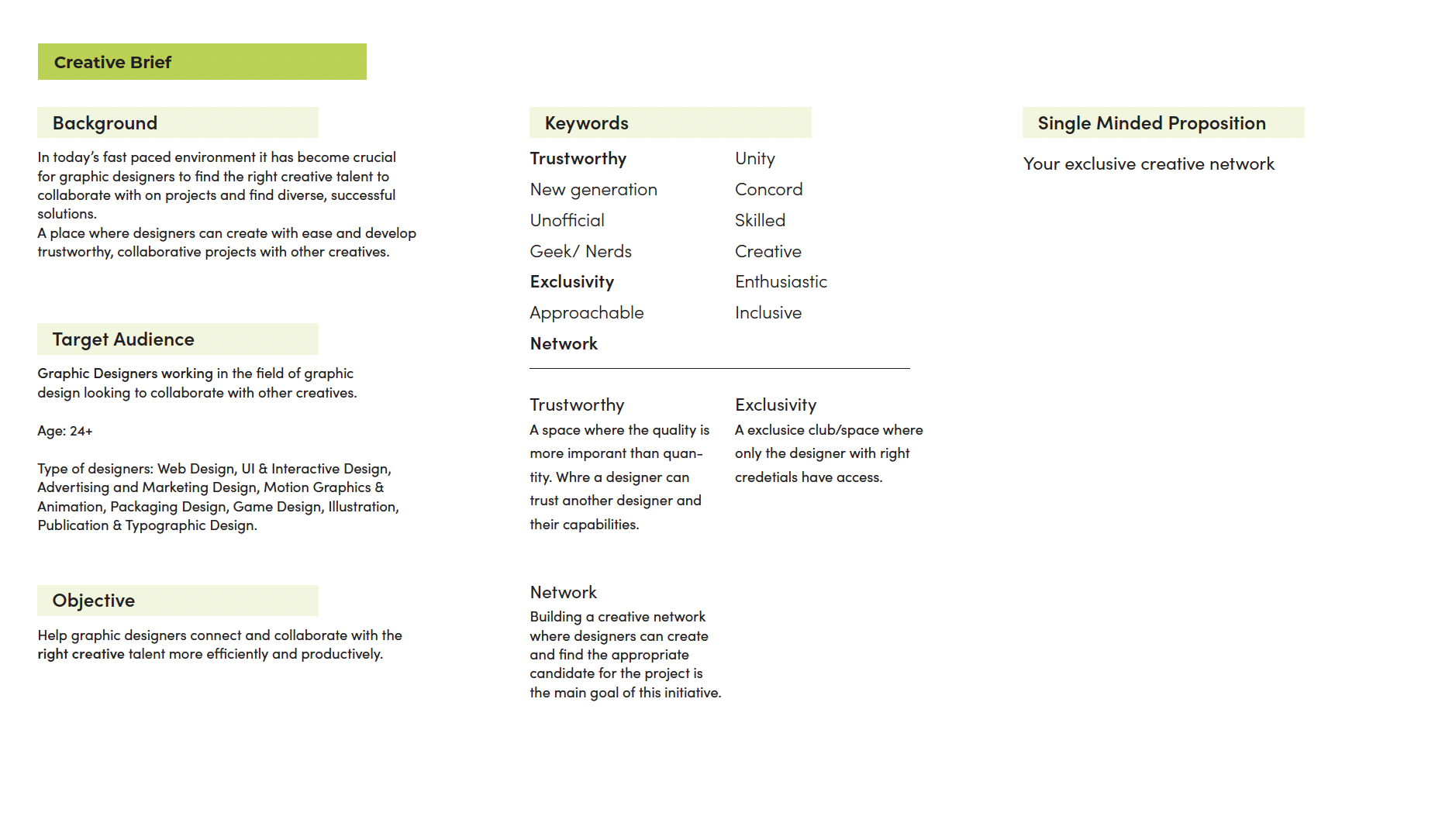
The Design List is a conceptual project that emerged from an interest in how designers find collaborators, build trust, and navigate access within creative communities. While many platforms prioritize visibility and scale, this project explored what it might look like to design a system centered on intention, alignment, and meaningful connection.
The project was approached as a research-led exploration, using design as a way to understand relationships, behaviours, and systems rather than as a purely visual outcome.
Objective
The objective of this project was to explore how designers could discover and collaborate with one another through a curated, research-driven system that values trust, shared intent, and quality over reach and visibility.
Discipline
User Experience Design / User Interface Design / Visual Design
Challenges
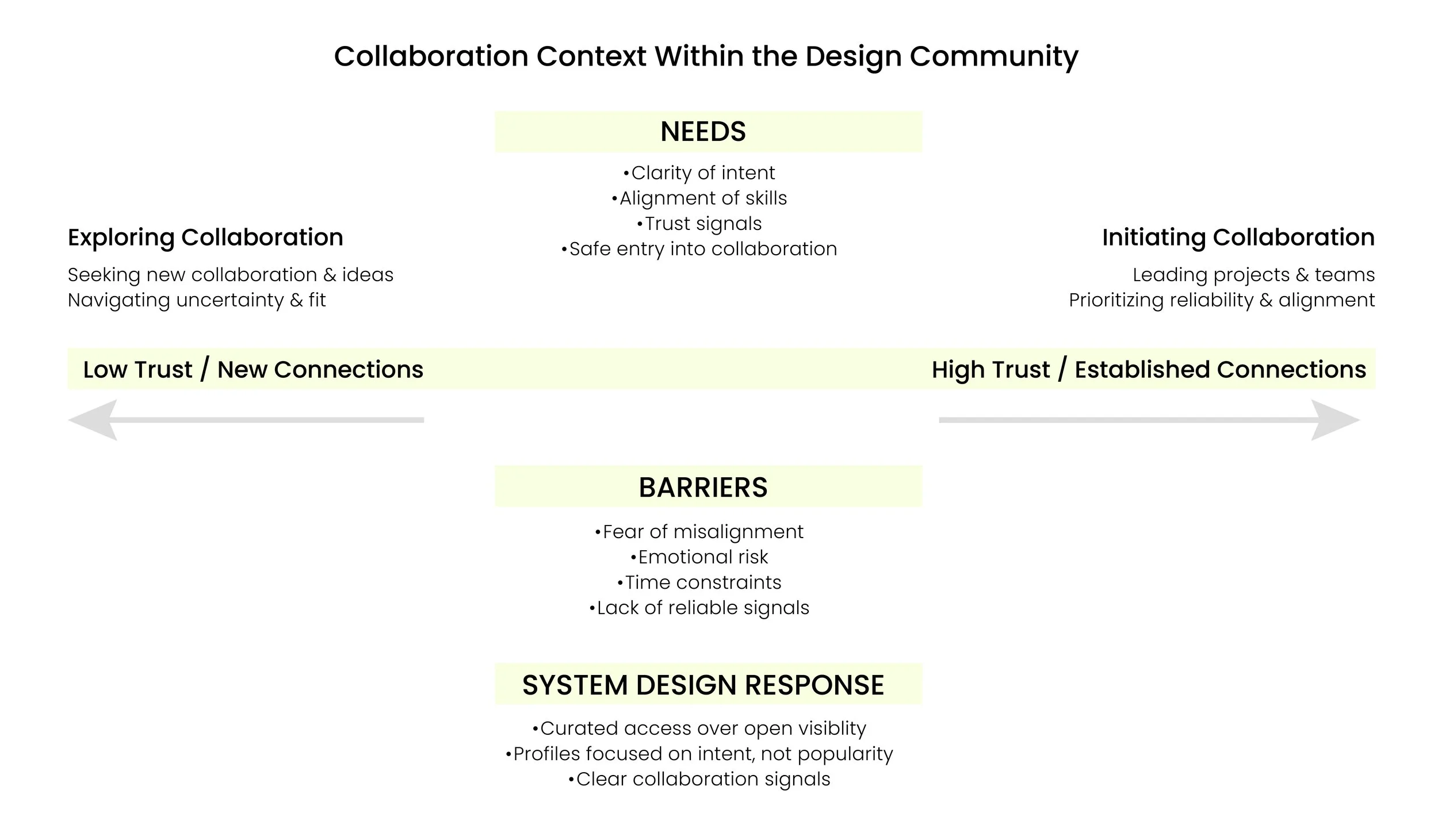
Addressing emotional barriers such as trust, vulnerability, and hesitation around collaboration.
Balancing openness with curation to avoid noise while maintaining accessibility.
Translating abstract concepts like alignment and intent into a structured, usable system.
Designing interaction beyond screens, where relationships and behavior shape the experience as much as interfaces.
Research Synthesis
Personas
-
Context
An early- to mid-career designer actively seeking collaboration to grow skills, explore ideas, and work on meaningful projects beyond individual assignments.Behavior
Actively looks for collaborators but struggles to find the right fit
Often relies on chance encounters or informal networks
Hesitates to reach out due to uncertainty around expectations and trust
Needs
A safe, approachable space to discover collaborators
Clear signals of skill, intent, and availability
Confidence that collaboration will be mutual and respectful
Pain Points
Difficulty finding designers with aligned interests and working styles
Frustration with miscommunication and unclear roles
Feeling overlooked or unsure where to begin
Design Implications
The system must lower the emotional barrier to reaching out
Clear structure around roles, intent, and collaboration type
Discovery based on alignment rather than popularity
-
Context
An experienced designer or creative lead responsible for initiating or guiding collaborative work, often within higher-stakes projects.Behavior
Prefers working with known or trusted collaborators
Is cautious when bringing new people into projects
Values reliability, communication, and shared responsibility
Needs
Trust signals before engaging
Clarity around commitment, expectations, and ownership
A way to discover new collaborators without risk
Pain Points
Difficulty trusting unfamiliar designers
Fear of misalignment impacting project quality
Limited time to vet collaborators thoroughly
Design Implications
The system must communicate credibility and accountability
Structured profiles that emphasize intent and experience
Curation over openness to maintain quality and trust
Problem Statement
How might a platform support meaningful collaboration among designers by prioritizing trust, alignment, and shared intent rather than visibility or scale?
Solution
The solution proposed a curated, research-driven platform that supports collaboration through structure rather than scale. By prioritizing intent, alignment, and trust over visibility, the system reframes discovery as a thoughtful process. Clear participation cues, contextual profiles, and guided interaction help reduce uncertainty and create space for meaningful collaboration within the design community.
The Design Process
The design process moved between research, synthesis, and making. Early exploration focused on mapping insights from interviews into themes that could guide system logic. Personas were developed around behavior and motivation rather than demographics, helping clarify how different designers might engage with the platform.
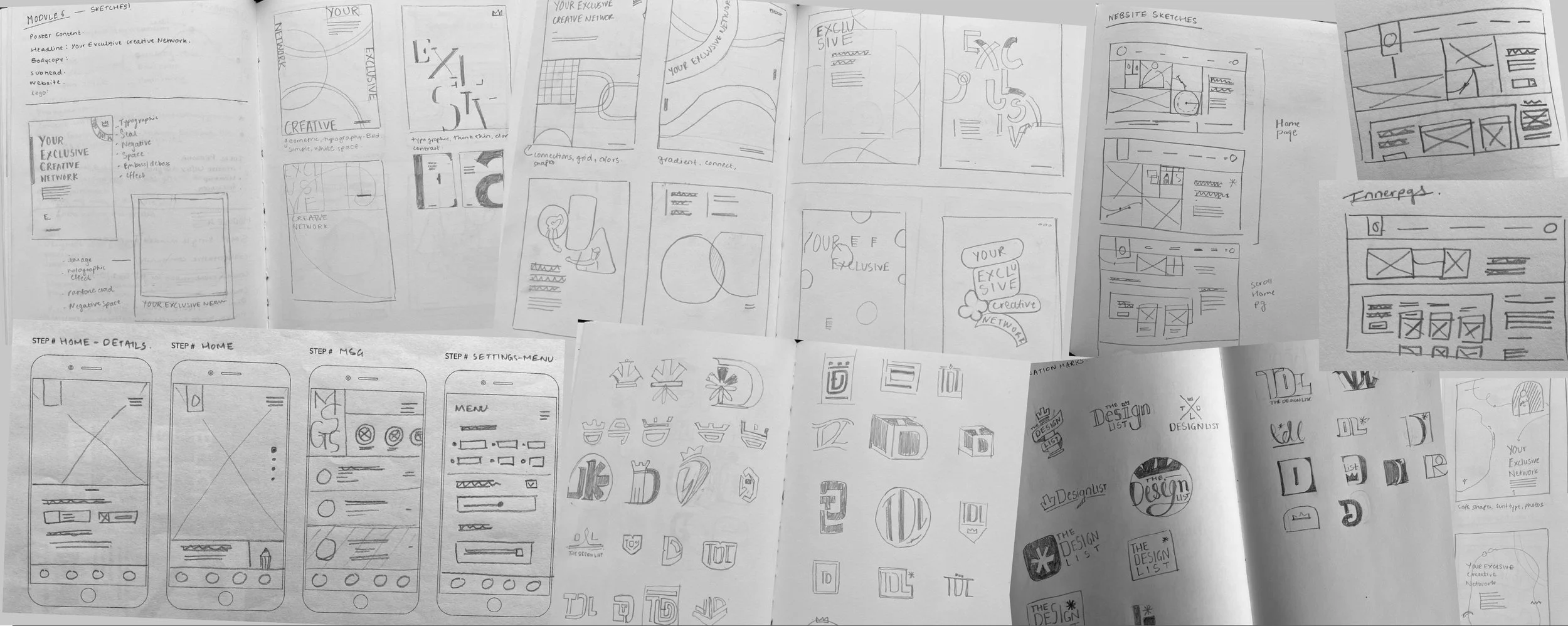
System diagrams and user journeys were used to explore how designers would enter, interact with, and move through the platform. Wireframes and interface explorations served as tools to test structure and flow, not as final visual statements. Throughout the process, design was used as a way to think iterating on ideas to better understand how collaboration could be supported through thoughtful structure.
Visual Design Process
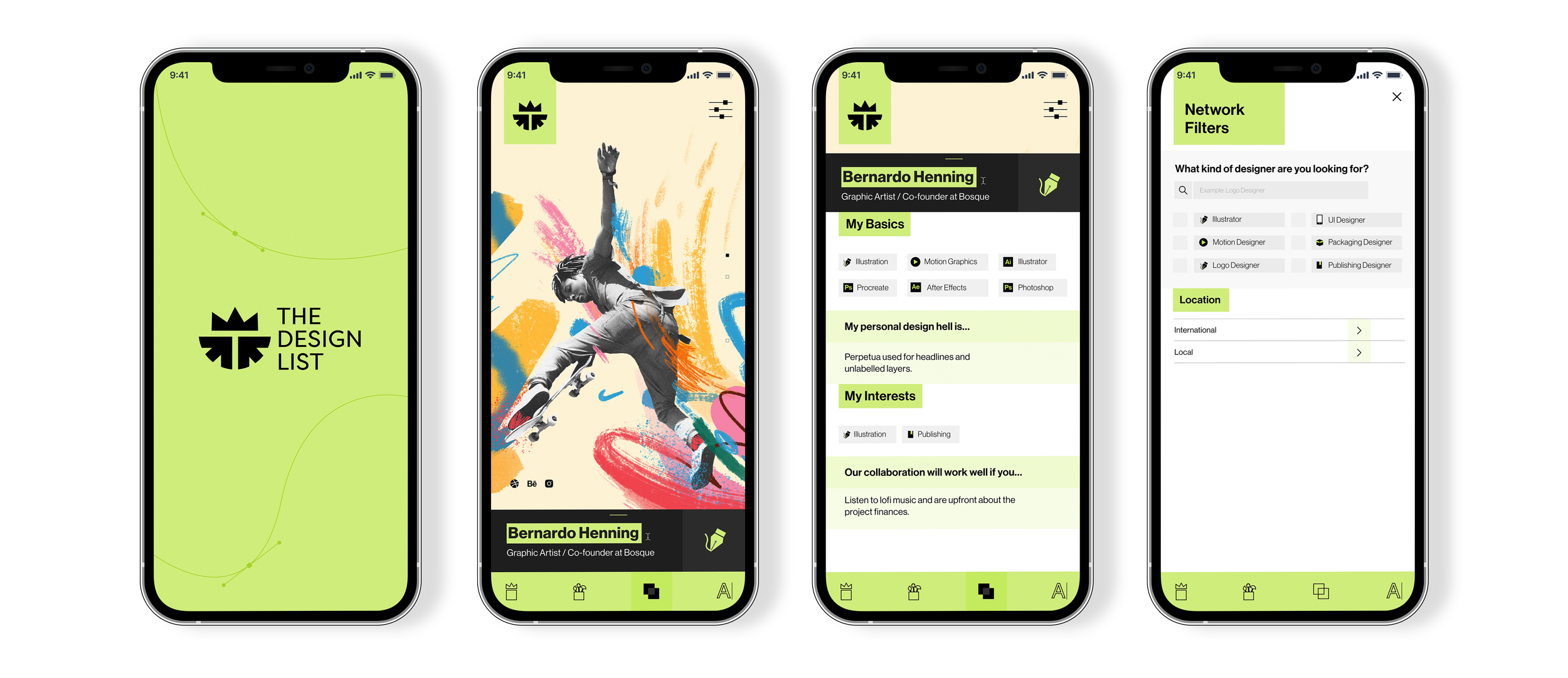
The visual design process evolved alongside the research, using making as a way to think through structure and interaction. Early explorations focused on layout, flow, and system logic rather than polished outcomes, using sketches, diagrams, and interface studies to test how ideas could take form.
The visual language drew from familiar design software interfaces and everyday interaction patterns. Modular elements and interface-like structures created a sense of familiarity, allowing the system to feel intuitive and connected to existing design workflows, with clarity and structure guiding each visual decision.

Systems Outcome
Developed a conceptual platform framework centered on trust, alignment, and intentional participation.
Defined system logic around access, discovery, and collaboration rather than visibility or popularity.
Created a structured flow that supports designers in finding collaborators based on shared intent and values.
Used interaction and system design as tools to explore relationships within creative communities.
Learnings
Gained insight into how emotional factors such as trust and hesitation strongly influence collaboration.
Learned how research-led thinking can guide system design even in speculative contexts.
Understood interaction design as the design of relationships, not just interfaces.
Reinforced the value of using design as a method for inquiry and reflection, not only problem-solving.


